Schools and SAFA structures
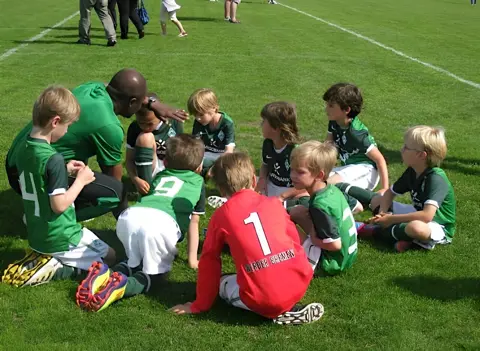
SAFA says schools football was placed directly under the control of the association, in partnership with government and aligned to the Minister's Schools Sports Programme. Participation in school competitions is therefore not an ad-hoc side enterprise. It is part of a formal football pathway that sits within SAFA's structures.
The next step for a school or club player is to play in organised SAFA leagues and in the regional and provincial selections that grow out of them. Which tournaments scouts attend changes from year to year, so the local football association or SAFA region is the place to ask. Small, privately organised "exposure festivals" can promise a lot, but they are not an official route.
Club pathways and reserve football
The Premier Soccer League does not run academies itself. Each club decides whether to keep a youth structure, how it recruits and when it holds trials, so the first point of contact is the club directly: check that it has an academy, whether you are eligible, and when intake happens.
Above academy level, the PSL runs a reserve competition (the Diski Challenge) in which young squad players get competitive matches. Its name, format and age rules have changed over the years, so check the current version on psl.co.za. Some reserve players go on to senior contracts, but a reserve place is a step on the ladder, not a guarantee.
Trials, agents and red flags
No legitimate agent should ask for money or documents upfront. Payment demands for "trials", for travel to clubs abroad, for work permits or for other paperwork are the classic signs of a scam aimed at young players and their families.
FIFA says that since 1 October 2023 any individual who provides football agent services to a client must hold a FIFA licence. To get one, a person must submit a complete application, meet the eligibility requirements, pass the FIFA exam and pay an annual fee. The licence is personal and non-transferable, and agents must keep meeting the eligibility, continuing professional development and reporting requirements to keep it.
FIFA's Agents Department manages licence applications, and disputes involving agents go to the Agents Chamber of the FIFA Football Tribunal. FIFA publishes a public register of licensed agents, so a name can be checked before any conversation goes further. Be wary of anyone who claims links to foreign clubs you cannot verify, and check claims with SAFA and FIFA before signing anything.
The practical takeaway: play organised school and club football, follow official SAFA and club channels for trials, and verify any agent through FIFA before sharing documents or money.
Sources
- FIFA Inside, FAQ & How to contact us, 2021-10-21, updated 2026-09-18: inside.fifa.com/transfer-system/agents/faq-agents
- FIFA Football Agent Regulations, FIFA Digital Hub, 2025-01-29: digitalhub.fifa.com/m/1e7b741fa0fae779/original/FIFA-Football-Agent-Regulations.
- FIFA Inside, How to become a licenced Football Agent, 2023-01-06, updated 2026-08-26: inside.fifa.com/transfer-system/agents/how-to-become-a-licenced-football-agent
- FIFA Inside, continuing professional development (CPD), 2023-01-06, updated 2026-06-04: inside.fifa.com/transfer-system/agents/education/continuing-professional-develop
- FIFA Inside, Agents, 2023-11-27, updated 2026-09-15: inside.fifa.com/transfer-system/agents
- SAFA/CAF D Licence Manual, 2025-02-24: ugc.production.linktr.ee/1eb56642-0db1-437c-947f-085fb09dd7e2_SAFA-CAF-D-License