Competing origin stories
One common story links the vuvuzela to the kudu horn, made from the horn of the large antelope native to southern Africa and blown to call villagers together for meetings.
A second story comes from the Nazareth Baptist Church, also known as Shembe. According to reporting by the public radio programme The World, horns had been part of the church's gatherings for decades before they were associated with soccer. The same account says the horn crossed into football in the 1990s, when a Kaizer Chiefs fan is said to have made a plastic model so he could bring it into stadiums.
The third claim is commercial. According to a Voice of America report, Neil van Schalkwyk's company Masincedane Sports in Cape Town first manufactured plastic vuvuzelas in the late 1990s. He said the company developed the plastic version to meet demand created by the long history of the kudu horn sound in South Africa. The product was first called the "boogie-blaster" before football fans renamed it the vuvuzela.
These stories do not necessarily cancel each other out. The most likely picture is a horn tradition with several ancestors, which football supporters adopted and which a manufacturer then turned into a cheap, mass-produced plastic product.
How football made it local
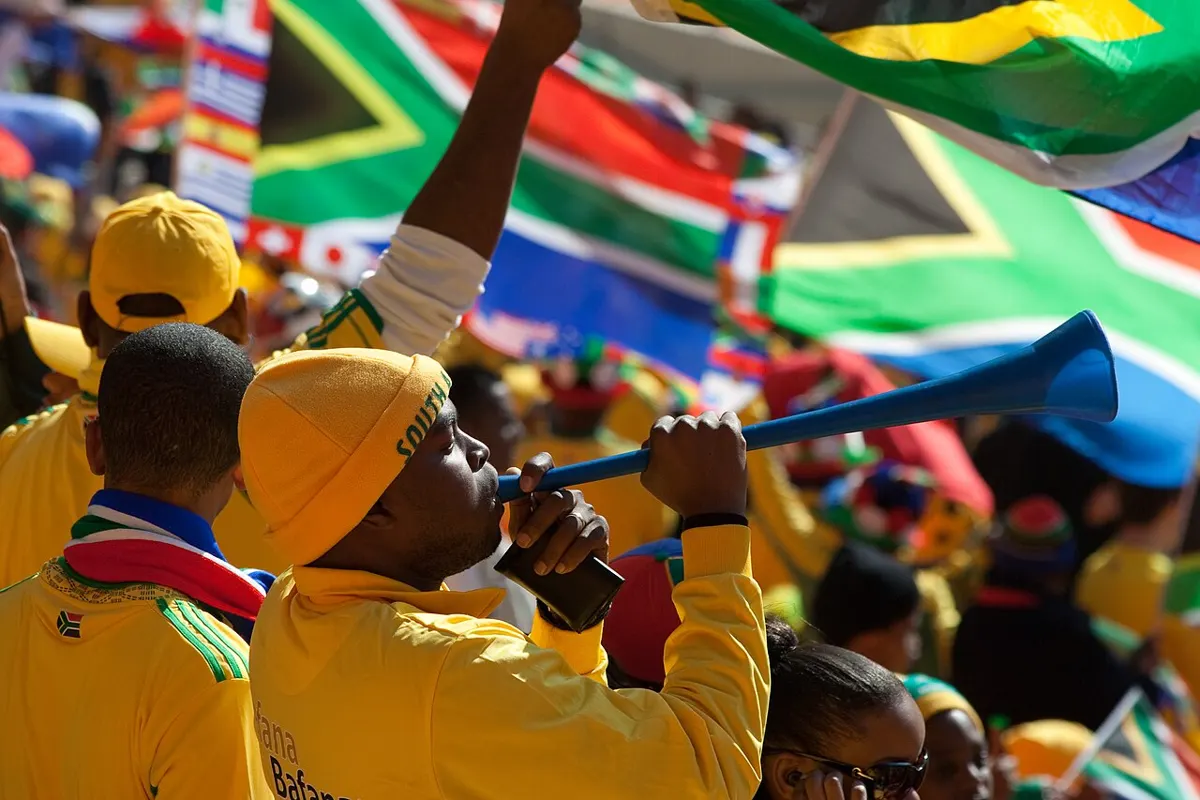
Whatever its exact roots, it was football that turned the vuvuzela into a fixture of South African stadium culture. By the 2000s the horn was a familiar sound at Premier Soccer League matches and Bafana Bafana games, blown throughout the 90 minutes to create a constant, buzzing wall of noise that visiting players and broadcasters quickly learned to recognise.
2010 and the noise debate
When South Africa hosted the 2010 FIFA World Cup, FIFA allowed the horn in stadiums and presented it as part of the "signature South African World Cup". Millions of television viewers around the world heard the drone for the first time, and reaction was split: many fans loved the atmosphere, while players, coaches and broadcasters complained that the noise disrupted games and interfered with commentary.
Hearing safety became part of the argument. A report by the US Centers for Disease Control and Prevention cited a South African Medical Journal study that measured vuvuzela sound output averaging 131 dBA at the horn opening and 113 dBA at a distance of two metres, levels at which sustained exposure can damage hearing.
Other sports took note. ESPN reported that FIBA called vuvuzelas "controversial instruments" and banned them from the 2010 basketball world championships because they could damage hearing and make communication on court difficult. The same report quoted a London surgeon warning that sustained exposure could cause permanent hearing damage.
The takeaway is that the vuvuzela's origin will probably never be settled to everyone's satisfaction, but its place in football history is secure. For fans who still carry one to the stadium, hearing protection is a sensible companion, and stadium rules on horns are worth checking before match day.
Sources
- CDC NIOSH Science Bulletin, “Vuvuzelas: What’s the Buzz?”: cdc.gov/niosh/bulletin/2010/vuvuzelas.html
- VOA News, “Vuvuzela Popular Symbol of South African Football”: voanews.com/a/a-13-2009-06-25-voa40-68690972/356075.html
- The World, “World Cup 2010: Vuvuzelas, the horns of Africa”: theworld.org/stories/2016/08/02/world-cup-2010-vuvuzelas-horns-africa
- CDC NIOSH Blogs, “Vuvuzelas: What’s the Buzz?”: cdc.gov/niosh/blogs/2010/vuvuzelas.html