Futsal: the fixed code
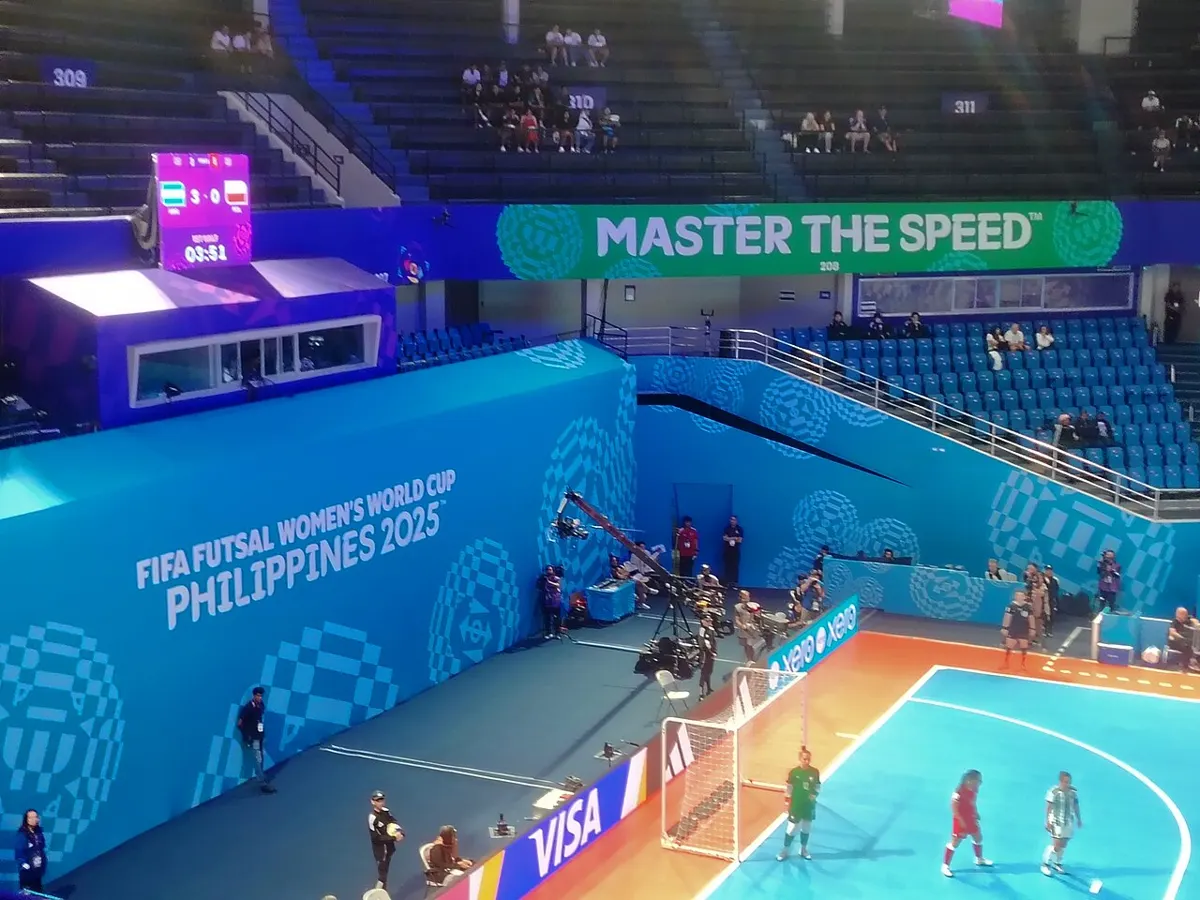
FIFA governs futsal under the Futsal Laws of the Game. Two teams of five players, including a goalkeeper, play two halves of 20 minutes on a stopped clock, so the 40 minutes are minutes of actual play. Substitutions are unlimited and rolling: players can change at any time through a substitution zone.
Futsal is played on a hard court with lines rather than walls, and uses a size 4 ball with reduced bounce, which keeps the ball on the floor. When the ball crosses the touchline, play restarts with a kick-in, and a goal cannot be scored directly from a kick-in.
Fouls are counted. From the sixth accumulated foul in a half, the opposing team gets a direct free kick without a wall, which makes careless defending expensive.
Five-a-side: the loose format
Five-a-side is less a code than a product. Commercial operators commonly use artificial pitches surrounded by walls or high netting, a standard size 5 football, and house rules that differ between centres and leagues. In the rules published by one operator, for example, substitutions have to be notified to the referee and happen at a stoppage, which is very different from futsal's rolling changes. Before joining a league, read that centre's rules on substitutions, the goal area and rebounds off the walls.
In South Africa futsal is part of the national football structure: SAFA activity reports list a Futsal National Team among the association's national teams. Five-a-side, meanwhile, is mostly a commercial and social game run by private venues and corporate leagues.
Which one suits which player
The rule differences point in clear directions. Futsal's small, heavy ball, tight court and constant play demand many touches and quick decisions, which is why it suits beginners and players who want to improve ball control and passing under pressure.
Five-a-side suits players who simply want a regular, sociable game close to home or work, with a normal ball and a familiar feel. The walls keep the ball in play, the pace can be high, and the format depends on what the local centre offers. Because the ball rarely goes out, games tend to be short bursts of running with little rest, which makes a weekly match a decent workout, but the skills learned are closer to the full-size game than to the precise, floor-based passing that futsal rewards.
The practical choice is simple: pick futsal for a standard international game with the same laws everywhere and a pathway through SAFA structures, and pick five-a-side if the goal is a weekly game under your local centre's house rules.
Sources
- Inside FIFA, “A crash course in futsal rules,” 10 September 2021: inside.fifa.com/news/a-crash-course-in-futsal-rules
- FIFA Laws of the Game document, 2006 edition: cdn1.sportngin.com/attachments/document/0026/1309/Futsal_Laws__FIFA_.pdf
- FUTSAL Laws of the Game, The AIFF: the-aiff.com/media/uploads/2022/07/Futsal-Laws-of-the-Game-2021_22-EN.pdf
- 5-a-side.com, “Summary of 5-a-side Rules,” 6 April 2017: 5-a-side.com/summary-of-5-a-side-rules/
- SAFA 2021 Activity Report: scribd.com/document/755110292/2021-SAFA-Activity-Report
- SAFA Annual Report 2013–2014: scribd.com/document/859874371/ANNUALREPORT2013-2014